How To Survive The CrossFit Open Without Torching Your Season (Or Your Joints)
The CrossFit Open is three workouts…but for a lot of active adults, the fallout lasts three months longer than it should. With a smart plan for volume, recovery, and your joints, you can treat the Open as a launchpad for your season instead of the reason it derails.

Why Active Adults Get Beat Up By The Open
As an active adult CrossFitter, you’re often stacking Open prep on top of work, family, and real‑life stress…not on top of college‑level recovery. Your body can absolutely handle intensity, but it does not love surprise spikes in volume, new skills under fatigue, or “ego RX” attempts you haven’t built toward.
This is why so many adults develop nagging shoulder, low back, or tendon pain that lingers long after the leaderboard closes. The goal of your CrossFit Open prep should be durability first, leaderboard second.
Step 1: Treat The Open As A 6-8 Week Season
The Open is three scores, but your body experiences it as a multi‑week build‑up, peak, and recovery phase. If you cram hard training, redo attempts, and extra “capacity work” into three weeks, you’re creating the perfect storm for overuse injuries.
Think in three phases:
Build (Starting 6 Weeks Prior to Open): Sharpen skills and build tolerance to likely movements (thrusters, wall balls, burpees, gymnastics, light barbell cycling), at volumes similar to Open workouts…but with more control.
Peak (Starting 1-2 Weeks Prior to Open): Keep intensity high in 1-2 key sessions per week, reduce junk volume, and protect your best efforts for the actual workouts.
Reset (1-3 Weeks After the Last Open Workout): Lower total volume 20-30%, keep strength work in, and rebuild your base so you don’t limp into the rest of the season.
If that sounds overwhelming to plan, that’s exactly what I map out with athletes during my complimentary consultations at Empowered Athletics Physical Therapy.
Step 2: Manage Training Volume Like An Adult With A Life
One of the biggest answers to “how to avoid injury during CrossFit Open” is managing volume instead of letting it manage you. Adults get in trouble when they add Open attempts on top of their usual training week instead of swapping and adjusting.
Use these guardrails during the Open:
Cap “all‑out” sessions at 2 per week (Open workout + 1 more high‑intensity day).
Keep lifting heavy, but drop accessory fluff and high‑fatigue extras that don’t help your score right now.
If you’re re‑doing a workout, treat it like a competition event…move other training around instead of “just squeezing it in.”
Inside my Rehab and Thrive sessions, I help active adults audit their current week, adjust volume, and plug in smarter accessory work so their joints feel better by Friday night…not worse.
Step 3: Play The Movement Game, Not The Mystery Game
You don’t know the exact workouts, but you do know the usual suspects. Smart CrossFit Open prep means building capacity in those movement patterns at loads and volumes your joints can actually recover from.
High‑yield areas for most active adults:
Shoulders: Kipping gymnastics, overhead pressing, snatches, and jerks often flare old issues.
Knees: Thrusters, wall balls, lunges, and box jumps pile up sneaky knee volume.
Low back: Deadlifts, fast barbell cycling, and high‑rep hinge patterns under fatigue are common culprits.
In 1:1 Rehab Sessions, I don’t just look at your pain; I look at how your shoulders, hips, and spine handle volume in the exact patterns you’ll see in workouts, then we dose progression so you’re not guessing what your joints can tolerate.
Step 4: Scale Smart So You Can Keep Training All Year
“RX or bust” is a quick way to make the Open the most painful three weeks of your year. Scaling is not just “less than RX,” it’s a tool to avoid the huge stress spikes that cause tendon pain and joint irritation.
Questions to ask before locking in RX:
Have I touched 90-100% of this weight recently in conditioning, not just strength work?
Can I hit at least 3-5 smooth reps of the skill under fatigue in practice (not just one hyped‑up max)?
Will this choice let me move consistently for the entire workout, or will it force long, painful breaks?
In a focused Rehab block or strategy consultation, we can look at your specific strengths and limits, talk through realistic Open‑style scenarios, and decide where RX makes sense, where a small scale protects your joints, and how to approach pacing so you don’t redline in the first three minutes.
Step 5: Use Recovery As A Performance Tool
Adults who thrive in the Open treat recovery as part of training, not a bonus if there’s extra time. When life stress, training stress, and poor sleep all pile up, your body’s ability to adapt drops…and injury risk climbs.
Non‑negotiables during the Open:
Sleep: Aim for consistent bed and wake times; 6.5-8 hours done consistently is more powerful than any gadget.
Fueling: Don’t “diet through the Open.” Under‑fueling is a massive hidden reason joints ache and performance tanks.
Movement snacks: 5-10 minutes of targeted mobility and breath work on non‑Open days keep your nervous system calm and joints moving well.
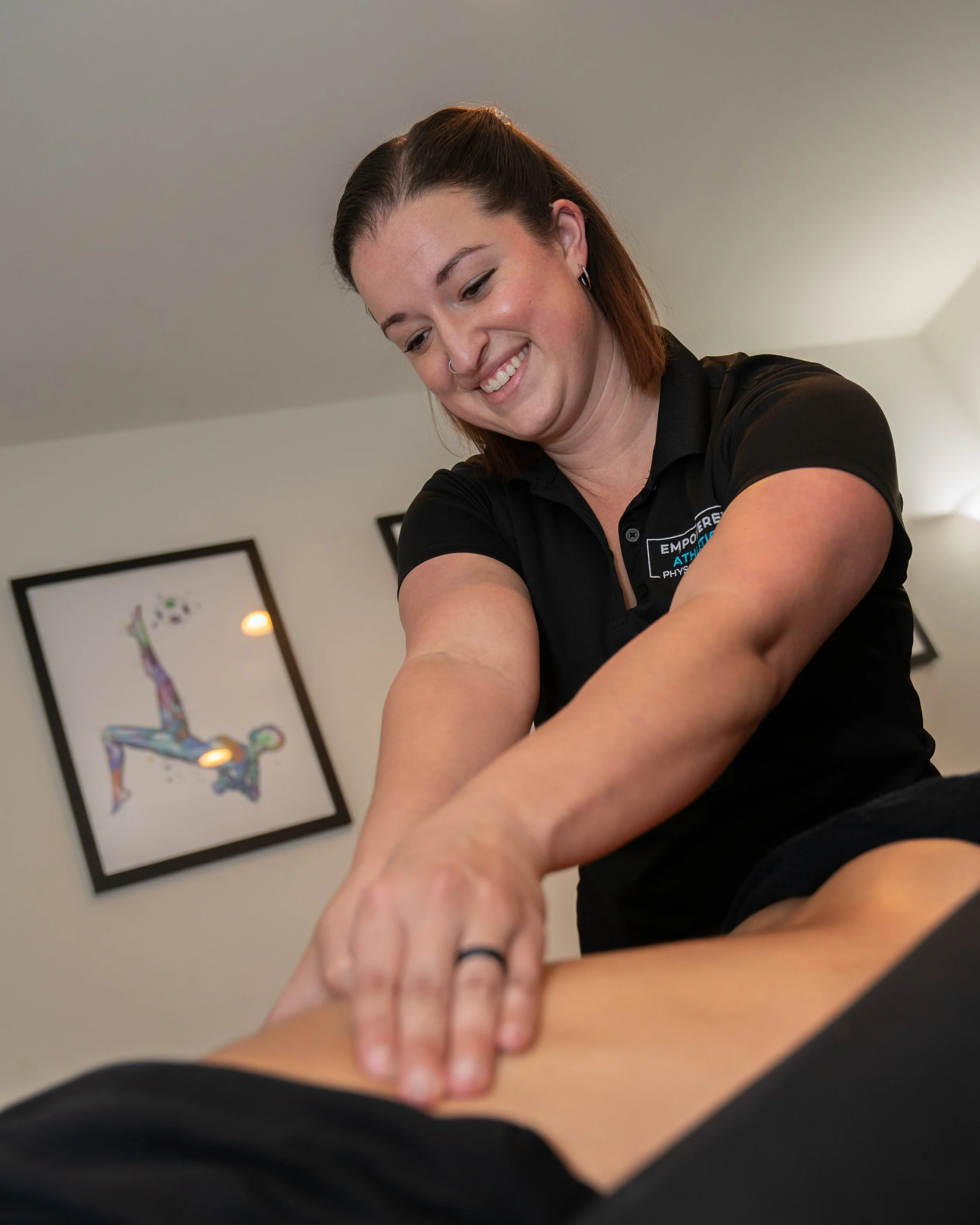
If you’re not sure how to build recovery into your actual schedule as a busy professional or parent, Thrive sessions are where we zoom in on what your body needs, use targeted bodywork and mobility to address the most overworked areas, and build a simple, realistic recovery plan you can actually stick to between Open workouts.
Step 6: Know The Difference Between “Open Sore” And “Season‑Ending”
Every adult CrossFitter expects some soreness during the Open; the trick is knowing when that soreness is a signal, not just noise. Pushing through the wrong kind of pain is how three weeks of competition turns into three months of rehab.
Red flags that need professional eyes:
Sharp, localized joint pain (especially shoulders, knees, or spine) that worsens as you move.
Swelling, catching, or giving‑way sensations, especially around knees or ankles.
Pain that doesn’t calm down within 48-72 hours or that gets worse with each workout.
At Empowered Athletics Physical Therapy, I offer complimentary consults…quick, no‑pressure conversations to help you decide if you can keep training, what to modify, and whether Rehab or Thrive sessions are the smart move.
How Empowered Athletics PT Keeps Active Adults In The Game
Most traditional physical therapy clinics still operate on the “three sets of clamshells and don’t squat past 90” model. That doesn’t work for adults who plan their year around the Open, local comps, the occasional HYROX or 5K, or simply showing up strong to class three to five days per week.
Here’s how my model at Empowered Athletics Physical Therapy is different:
| Aspect | Typical PT Experience | Empowered Athletics PT Experience |
|---|---|---|
| Session length | 15-30 minutes with overlapping patients | 60‑minute, 1‑on‑1 sessions |
| Focus | Pain reduction, generic exercises | Sport‑specific rehab and performance for CrossFit |
| Environment | Tables, bands, low‑level equipment | Barbells, rigs, sleds, machines you actually use |
| Plan design | Cookie-cutter, printed handouts | Customized programming around your box and schedule |
| Return‑to‑sport testing | Minimal or time‑based (“6 weeks, then cleared”) | Capacity‑based decisions that match your goals |
This means we can treat your Open prep like the short “season” it is, not just hand you a sheet of exercises and hope for the best.
Rehab Sessions: If You’re Already Dealing With Pain
If you’re entering the Open with a shoulder that “always lights up on kipping,” an old knee issue, or low back pain that makes you nervous to pull from the floor, Rehab is your best first step.
Rehab at Empowered Athletics Physical Therapy is built for active adults, athletes, and postpartum moms who want more than just symptom relief…they want a full return‑to‑sport plan that fits their life. In a Rehab block, we:
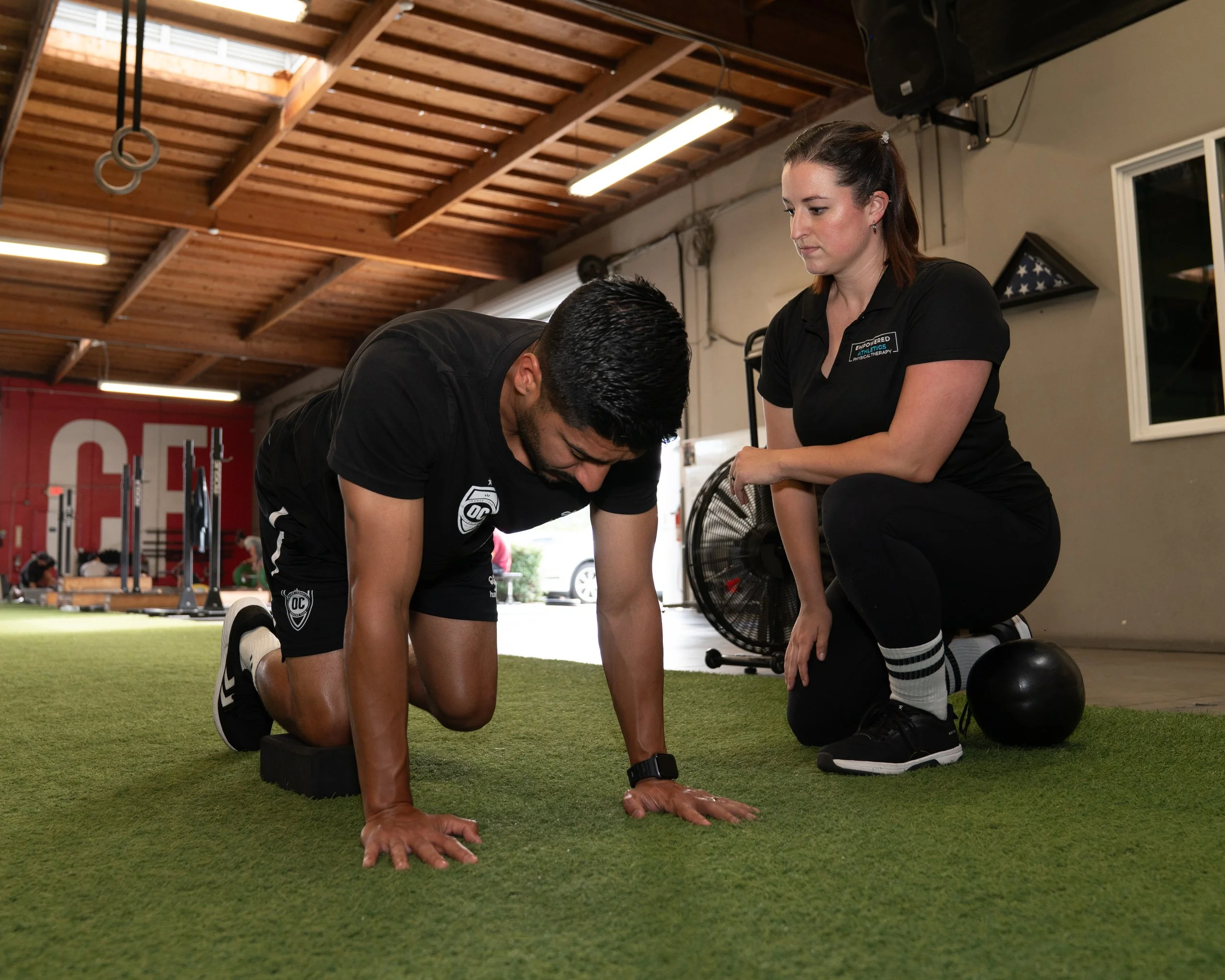
Start with a deep‑dive evaluation of your movement, strength, and capacity in the exact patterns that bug you (think overhead squats, kipping, pulling from the floor…not just lying on a table).
Use targeted exercises and hands‑on care to calm symptoms down quickly while keeping you as active as possible…no “just stop working out for six weeks” advice.
Progress you through a customized plan (in‑person and/or virtual) that rebuilds capacity to Open‑level demands so you feel confident in what your shoulder, knee, or back can tolerate when you hear “3, 2, 1 go.”
You can choose 60‑minute, one‑on‑one in‑person sessions in Laguna Niguel or virtual options that include live calls, customized programming, video review, and messaging support…ideal if your schedule is packed during the Open.
Thrive Sessions: For Healthy Athletes Who Want An Edge
Thrive sessions are for the active adult who isn’t currently injured but feels beat up from training, work, or life and wants to feel and perform their best through the Open and beyond.
Thrive sessions at Empowered Athletics Physical Therapy focus on personalized mobility, bodywork, and recovery strategies so your body can actually keep up with your goals. In these 30‑ or 60‑minute in‑person sessions, we:
Use targeted hands‑on work (like soft tissue, cupping, or scraping, as appropriate) and mobility to address the specific tight, overloaded, or cranky areas your training is creating.
Build a practical recovery routine you can implement around your real life: warm‑ups, cool‑downs, and weekly habits that help you feel fresher and move better in class.
Adjust what we do each visit based on where you are in the training or competition cycle, so you walk out feeling better prepared for whatever is on the whiteboard.
If you’re not injured but know your body could feel a lot better, Thrive sessions are where we keep you ahead of problems instead of waiting until something sidelines you.
Complimentary Consults: Your “Pre‑Open” Strategy Session
A complimentary consultation is where we connect the dots between your training, your life, and your joints before the Open kicks off. Think of it as a low‑pressure, 15-30 minute strategy session, not a formal evaluation or treatment.
In this call, we typically:
Review your history: recurring pain, movements that always feel sketchy, and what you want out of this season.
Look at your current training week and recovery habits to spot obvious red flags and easy wins.
Decide whether a focused block of Rehab or a few Thrive sessions makes sense…or whether simple tweaks are enough.
You walk away knowing exactly where to focus so you don’t wait until after a flare‑up to get help.
Your Next Step Before The Open Starts
You don’t need a complete overhaul to survive the Open without torching your season, you need a clear plan, an honest look at your current capacity, and a few strategic adjustments.
If you’re an active adult CrossFitter in or around San Juan Capistrano or Laguna Niguel, here’s what to do next:
Book a complimentary consultation with Empowered Athletics Physical Therapy so we can map out your Open, identify your biggest injury‑risk levers, and decide whether Rehab or Thrive is the best fit right now.
If needed, schedule a Rehab block to address current pain and build back to full capacity, or Thrive sessions to stay ahead of soreness, stiffness, and fatigue while you push hard through the season.
The Open is supposed to be a highlight of your year…not the reason you spend the next three months modifying every workout. Let’s make sure this season proves what your body can do, not what it can barely survive.